68
Affiliate disclosure. We may earn a commission when you buy through this link, at no extra cost to you.
Supplement Facts
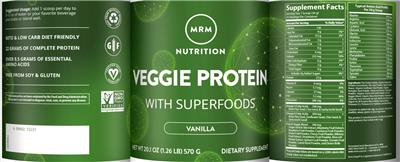 Label scan from NIH DSLD — open full size
| Ingredient | Amount | % DV% Daily Value — how much of the recommended daily intake one serving provides, based on a 2,000 calorie diet. 100% = full daily need. Values over 100% are common for water-soluble vitamins (B, C) and generally safe. Values over 200% are highlighted. |
|---|---|---|
| Calories | 150 Calorie(s) | — |
| Total Fat | 4 Gram(s) | 5% |
| Cholesterol | mg | — |
| Sodium | 235 mg | 10% |
| Total Carbohydrates | 6 Gram(s) | 2% |
| Protein | 22 Gram(s) | — |
| Vitamin D | mcg | — |
| Niacin | 5.7 mg | 36% |
| Calcium | 37 mg | 3% |
| Iron | 5.3 mg | 30% |
| Potassium | 260 mg | 6% |
| Omega-3 Fatty Acids | 760 mg | — |
| Omega-6 Fatty Acids |
Other ingredients: Pea Protein isolate, organic Brown Rice Protein concentrate, Flax Seed Powder, natural Vanilla flavor, organic Sunflower seed powder, organic Pumpkin seed powder, Stevia leaf extract, Chia seed powder, Sacha Inchi, Powder, Fruit & Veggie Blend, Organic Maca root powder, Potassium Chloride, Pure Ocean Sea Salt, Monk Fruit extract, Alpha Galactosidase, Protease 4.5, Protease 6.0, Peptidase, Bromelain
Score Breakdown
Dosage TransparencyAre all ingredient amounts explicitly listed on the label? Are %DV values provided where applicable? This measures transparency of dosing, not clinical efficacy.15/35
Label TransparencyHow complete is the labeling? Checks serving info, dietary certifications, and whether any doses are hidden behind proprietary blends.20/25
Formulation CleanlinessHow clean are the inactive ingredients? Penalizes artificial colors, sweeteners, titanium dioxide. Rewards vegan, gluten-free, organic.25/25
Ingredient ProfileFormula composition signals: focused vs comprehensive, use of branded/patented forms (KSM-66, Albion, etc.), explicit dosing.8/15
This score evaluates label quality — dosage disclosure, transparency, cleanliness of inactive ingredients, and formula composition. It does not measure clinical efficacy, bioavailability, or third-party testing. Read full methodology
Better-scored alternatives
Products with overlapping ingredients and a higher SupplementScore. Based on dosage transparency, label cleanliness, and formula quality.
Nature's Bounty Optimal SolutionsComplete Protein & Vitamin Shake Mix Vanilla Bean
powder13 servings
77/100+9
Nature's Bounty Optimal SolutionsComplete Protein & Vitamin Shake Mix Decadent Chocolate
powder13 servings
77/100+9
IN.FORM Nature's SunshineMetabolic Age Support Pea Protein Shake Chocolate
powder15 servings
80/100
General Ingredient Research — not an evaluation of this product
The research summaries below are about the ingredients in general, drawn from published studies that often use different doses, forms, and populations than this product. A "strong" evidence rating for an ingredient does not mean this product will produce that effect — studied doses may be significantly higher or lower than what is contained here. Always verify doses against the Supplement Facts table above.
strong
Supports bone health
Primary structural component of bones. Adequate lifelong intake, combined with vitamin D, helps prevent osteoporosis — supported by extensive clinical evidence.
strong
Supports muscle function
Essential for muscle contraction through calcium signaling.
moderate
Supports cholesterol levels
At pharmacological doses (1500-3000mg), niacin may improve HDL cholesterol. This effect is dose-dependent and not expected at typical supplement doses.
strong
Supports energy metabolism
Essential coenzyme (NAD/NADP) in hundreds of metabolic reactions.
strong
Supports iron levels
Iron supplementation is used to address iron deficiency. Should be taken under medical supervision as excess iron can be harmful.
strong
Supports energy levels
Iron is essential for oxygen transport and cellular energy production.
Reviews (0)
No reviews yet — be the first.
Taken Veggie Protein Vanilla? Your experience helps others decide. It takes about a minute.
All scores are algorithmically generated from publicly available label data (NIH Dietary Supplement Label Database) and reflect label quality — not clinical efficacy, safety, or product quality. This page is not affiliated with or endorsed by MRM Nutrition. If you represent this brand and believe any information is inaccurate, please contact us for a correction. Read full methodology