iPro Organic Supplements
Nitric Shock Fruit Punch
64
Affiliate disclosure. We may earn a commission when you buy through this link, at no extra cost to you.
Supplement Facts
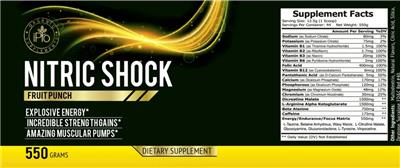 Label scan from NIH DSLD — open full size
| Ingredient | Amount | % DV% Daily Value — how much of the recommended daily intake one serving provides, based on a 2,000 calorie diet. 100% = full daily need. Values over 100% are common for water-soluble vitamins (B, C) and generally safe. Values over 200% are highlighted. |
|---|---|---|
| Sodium | 80 mg | 3% |
| Potassium | 75 mg | 2% |
| Vitamin B1 | 1.5 mg | 100% |
| Vitamin B2 | 1.7 mg | 100% |
| Vitamin B3 | 20 mg | 100% |
| Folic Acid | 400 mcg | 100% |
| Vitamin B12 | 6 mcg | 100% |
| Pantothenic Acid | 5 mg | 50% |
| Calcium | 170 mg | 17% |
| Phosphorus | 120 mg | 12% |
| Magnesium | 48 mg | 12% |
| Chromium | 30 mcg | 25% |
| Dicreatine Malate | 1500 mg |
Other ingredients: Maltodextrin, Natural Flavors, Citric Acid, Silica, Dextrose, Sucralose, FD&C Red #40
Score Breakdown
Dosage TransparencyAre all ingredient amounts explicitly listed on the label? Are %DV values provided where applicable? This measures transparency of dosing, not clinical efficacy.27/35
Label TransparencyHow complete is the labeling? Checks serving info, dietary certifications, and whether any doses are hidden behind proprietary blends.24/25
Formulation CleanlinessHow clean are the inactive ingredients? Penalizes artificial colors, sweeteners, titanium dioxide. Rewards vegan, gluten-free, organic.7/25
Ingredient ProfileFormula composition signals: focused vs comprehensive, use of branded/patented forms (KSM-66, Albion, etc.), explicit dosing.6/15
This score evaluates label quality — dosage disclosure, transparency, cleanliness of inactive ingredients, and formula composition. It does not measure clinical efficacy, bioavailability, or third-party testing. Read full methodology
Better-scored alternatives
Products with overlapping ingredients and a higher SupplementScore. Based on dosage transparency, label cleanliness, and formula quality.
General Ingredient Research — not an evaluation of this product
The research summaries below are about the ingredients in general, drawn from published studies that often use different doses, forms, and populations than this product. A "strong" evidence rating for an ingredient does not mean this product will produce that effect — studied doses may be significantly higher or lower than what is contained here. Always verify doses against the Supplement Facts table above.
strong
Supports bone health
Primary structural component of bones. Adequate lifelong intake, combined with vitamin D, helps prevent osteoporosis — supported by extensive clinical evidence.
strong
Supports muscle function
Essential for muscle contraction through calcium signaling.
moderate
Supports sleep quality
May improve sleep quality, especially in older adults and those with low magnesium status.
strong
Supports bone health
60% of body magnesium is stored in bone. Essential for bone mineralization.
moderate
Supports muscle recovery
May reduce muscle cramps and support post-exercise recovery.
strong
Supports red blood cell formation
Essential for red blood cell formation. Deficiency causes megaloblastic anemia, confirmed by decades of clinical evidence.
strong
Reviews (0)
No reviews yet — be the first.
Taken Nitric Shock Fruit Punch? Your experience helps others decide. It takes about a minute.
All scores are algorithmically generated from publicly available label data (NIH Dietary Supplement Label Database) and reflect label quality — not clinical efficacy, safety, or product quality. This page is not affiliated with or endorsed by iPro Organic Supplements. If you represent this brand and believe any information is inaccurate, please contact us for a correction. Read full methodology